Flare to Field

Flare gas to field power.

Field Power Nodes that convert flare and field gas into resilient on-site electricity for uptime-critical oilfield loads.

FPN-01 Field Gas to Power
Flare to Field process flow Site gas moves through conditioning into a field power node, then into controlled power for field loads. INLET FT FUEL CONDITIONING FIELD GENSET LOAD BUS GAS QUALITY LOAD PROFILE INTERCONNECT SITE REVIEW FUEL: FIELD / FLARE GAS OUTPUT: SITE-MATCHED POWER
Opportunity

Flared gas is lost value. Field power restores control.

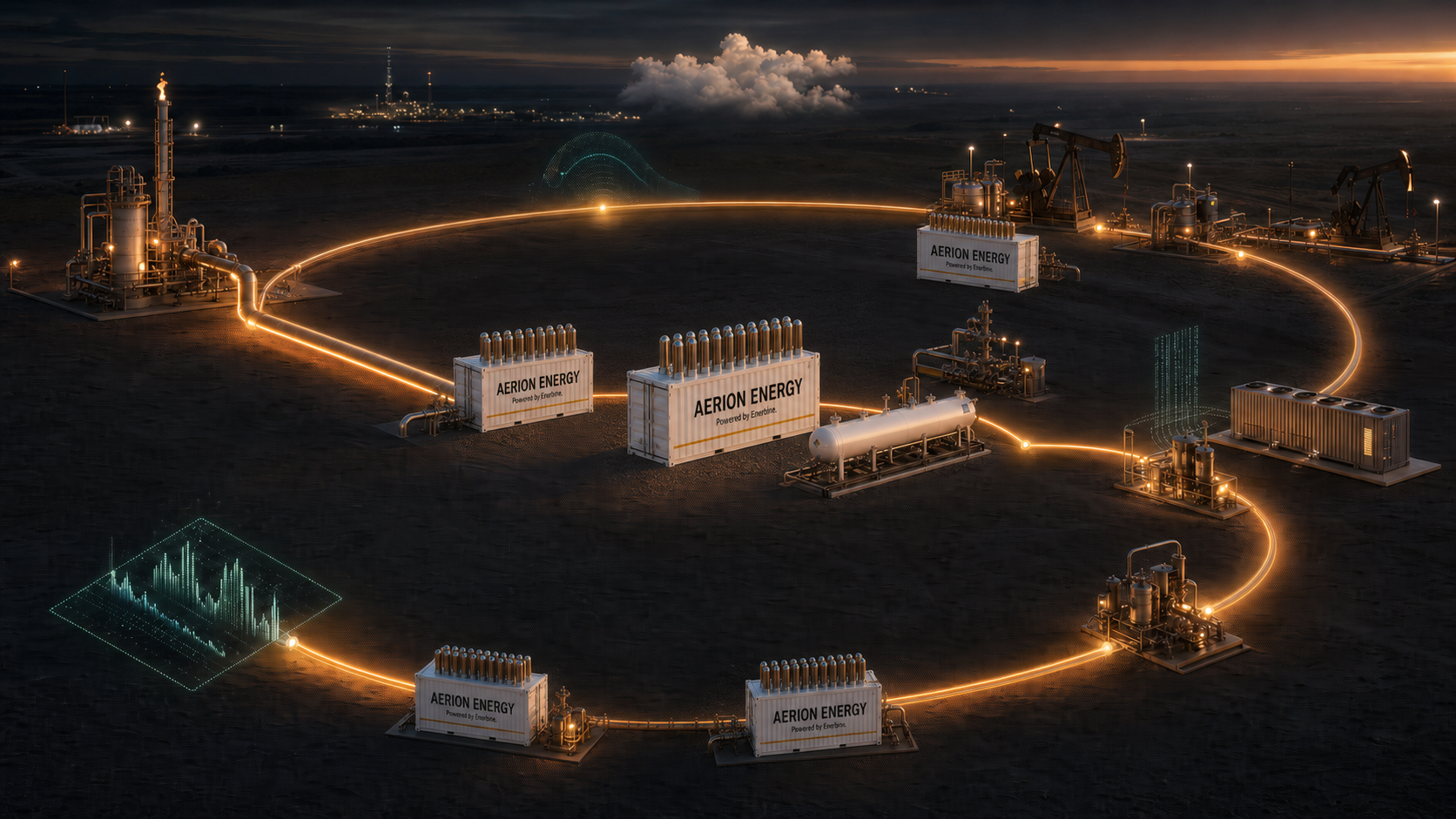
Every day, oil and gas operations flare or strand gas they cannot economically move to market. That same gas can support power close to the wellhead, reducing wasted fuel, strengthening resilience, and creating a practical path to lower routine flaring and related CO2 emissions.

Gas already on site

Turn wasted gas into site power.

Flare and field gas can become productive electricity at the point of production, reducing wasted gas and related CO2 emissions.

Field load demand

Power where uptime matters.

Production pads, compression, water handling, instrumentation, microgrids, and compute loads need resilient power close to the fuel source.

Deployable package

A deployable path from gas to load.

Aerion evaluates site conditions and configures a field power package around the operator's real fuel, load, and operating constraints.

What We Build

Field Power Nodes for oilfield gas utilization.

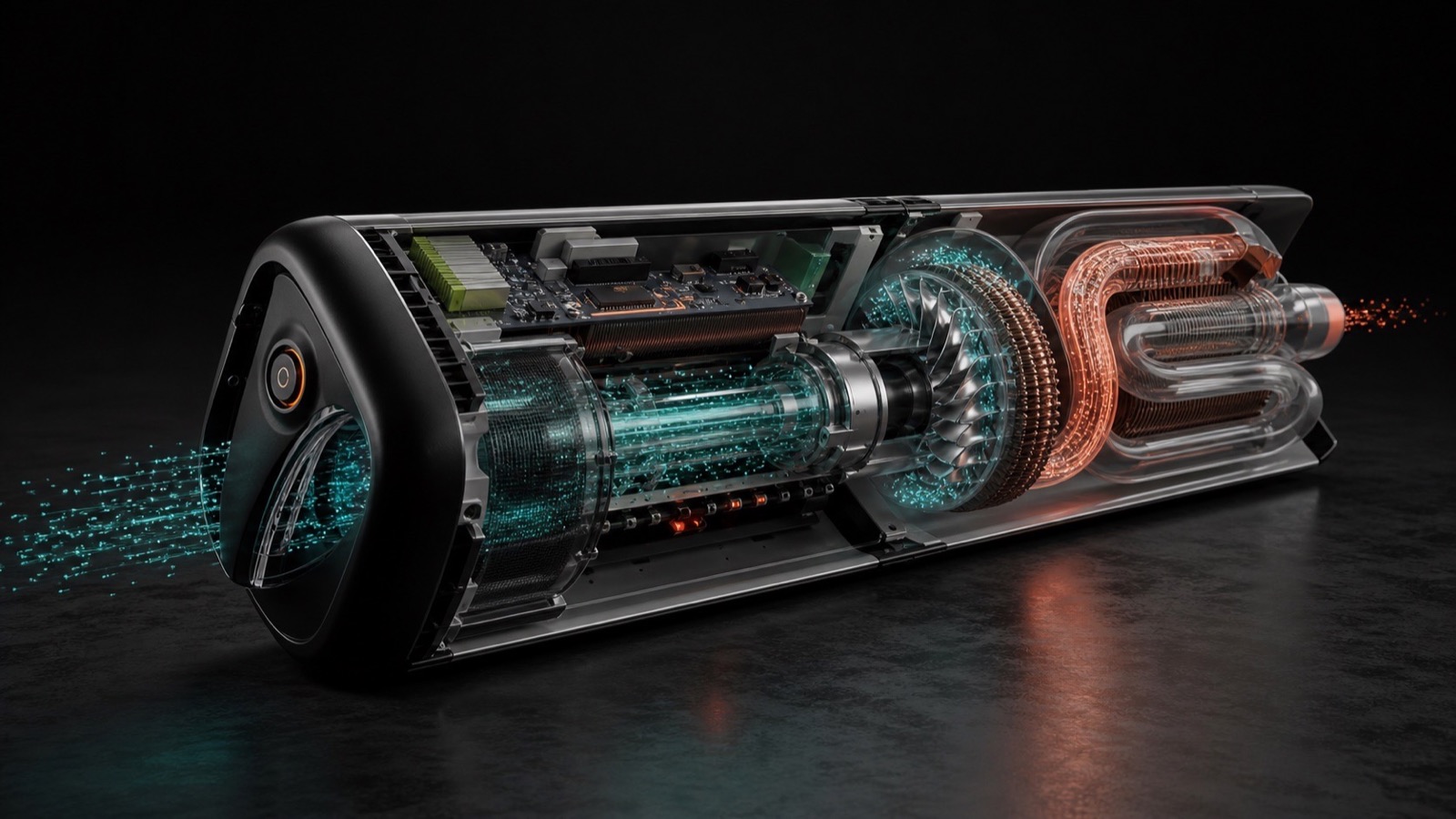
The Field Power Node is Aerion's core architecture: a modular, self-contained power unit that takes raw field or flare gas in and delivers conditioned electricity out. Each node integrates fuel conditioning, generation, controls, and power delivery in one deployable package for a specific site where the grid or fuel supply chain is not enough.

Gas input
Field gas or flare gas
Node package
Conditioning + generation + controls
Deployment model
One configured node per field site
Output
Resilient site power
Field Power Node schematic Technical system map showing field gas intake, conditioning, generation, switchgear, controls, and output to field loads. FIELD POWER NODE - SITE ARCHITECTURE REV V1 / FEASIBILITY PACKAGE BOUNDARY: FIELD POWER NODE PRIMARY BASIS: SITE GAS + LOAD REVIEW SKID / SITE PACKAGE FIELD GAS INLET SITE LOAD OUTPUT GAS CONDITIONING GC-100 GENERATION PACKAGE PG-200 SWITCHGEAR PROTECTION SW-300 SITE INPUTS NODE CONFIG POWER DELIVERY OPERATIONS GAS QUALITY CONDITIONING LOAD PROFILE MONITORING CONTROL + MONITORING FUEL PATH POWER PATH CONTROL SIGNALS
Fuel source and gas qualityLoad profile and uptime needsResilience requirementsLocation, access, and logisticsInterconnect and distributionEmissions and compliance constraintsCommercial and operating model
Applications
Wellsite at dusk with field equipment and gas flare

A fit for sites where fuel and load are already close.

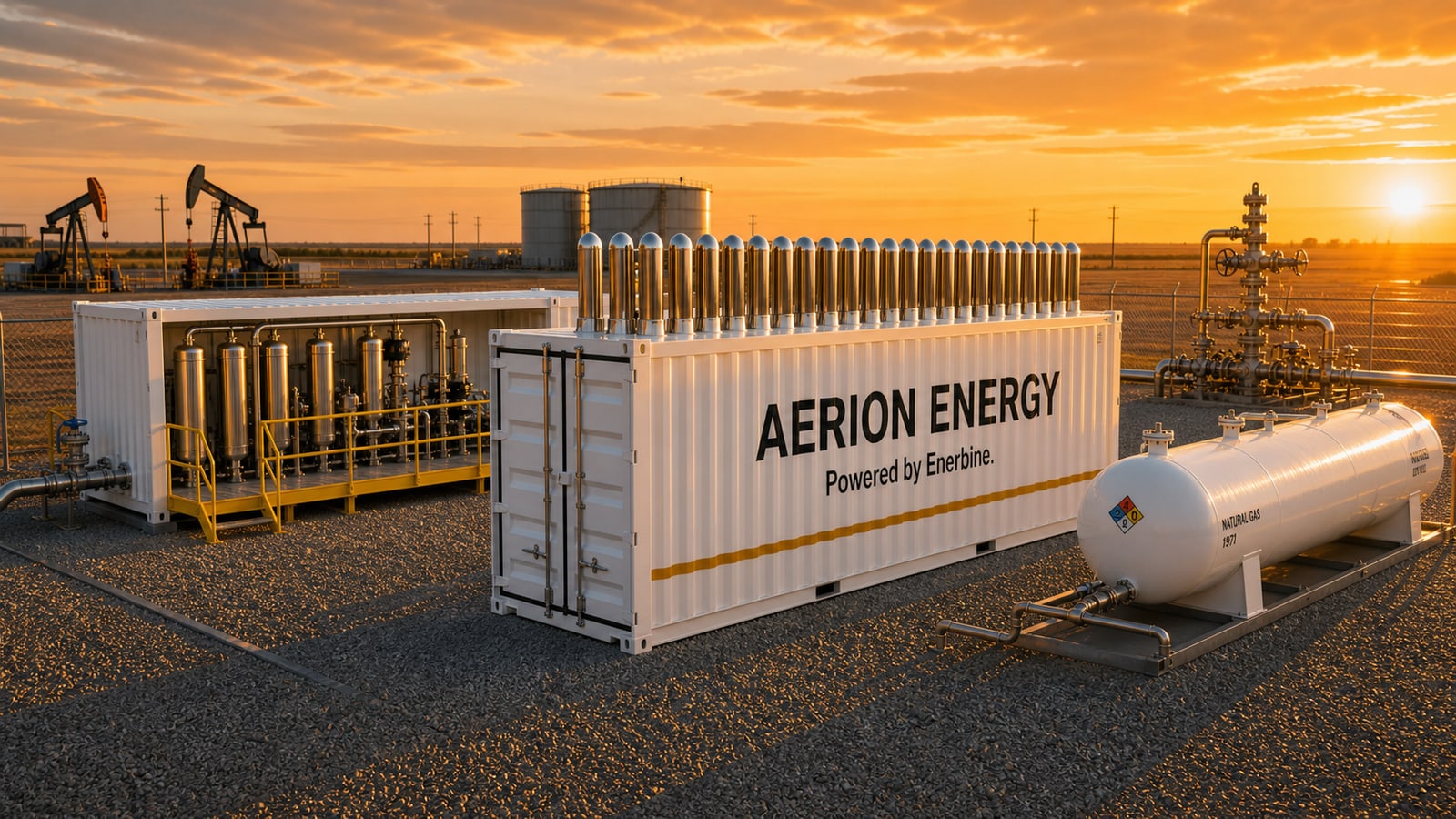
Aerion targets sites where conventional power is slow, expensive, or unavailable, and where usable gas is already present or wasted. The strongest projects have a nearby load, a known gas stream, and a clear operating reason to improve uptime, reduce fuel logistics, and support field operations closer to the asset.

Remote production pads

Stranded gas sites

Flaring reduction projects

Lease power and microgrids

Field data and compute loads

Industrial sites near upstream fuel

How We Work

A clear path from site facts to field power.

The first conversation is concrete: confirm the opportunity, define the node, align the deployment path, and plan the support model before hardware moves to the field.

01

Site screen

Confirm the fuel source, power demand, uptime target, operating limits, access, and commercial fit.

02

Configuration

Define the gas handling, conditioning needs, generation package, controls, and interconnect.

03

Deployment path

Align installation scope, operating model, monitoring, maintenance, and emissions reduction objectives.

04

Commissioning & support

Bring the node online with the site team and support the operating plan after startup.

Why Aerion

Field power designed for resilience and uptime.

Aerion starts with real field conditions, not generic power assumptions. The result is a node architecture operators can evaluate against the work their site actually needs to perform.

  • A field node architecture that combines fuel conditioning, generation, controls, and power delivery in one site package.
  • Designed for field and flare gas opportunities where grid dependence, diesel logistics, or fuel delivery limit resilience.
  • One node is configured around one site where uptime is operationally critical.
  • Feasibility reviews turn field conditions into a practical deployment path for reducing wasted gas, routine flaring, and associated CO2 emissions.

Contact

Let's put your stranded gas to work.

Tell us where the gas is, what the site needs to power, and what constraints are driving the project. Aerion is engaging with operators, project developers, technology partners, and infrastructure stakeholders on resilient site power and flare-gas-to-power projects.